What makes this piece special is its form. A figurative animal and this piece is a tekke işi. A work shaped within Sufi lodge.
In the Ottoman world, figuration exists, yet rarely as a fully independent, three-dimensional sculpture. Free-standing animal forms remain limited.
It is extremely unconventional, rare and at times exceptional within its time.
This period carries an intense contact with the West. Orientalism, academic art, and realism begin to shape new visual languages. Figurative expression becomes more visible, especially within the palace and elite circles.
The Ottoman Empire represents a cosmopolitan structure that even today feels unmatched. There is no aristocracy. A space where individuals from different religions, origins, and classes could shape their own path through skill and intention.
It does not produce a single aesthetic.
Armenian, Greek, Jewish, Levantine, and Muslim craftsmen work side by side.
Place of Origin: Ottoman Empire
Dimensions: HWD: 34 x 70 x 31 cm

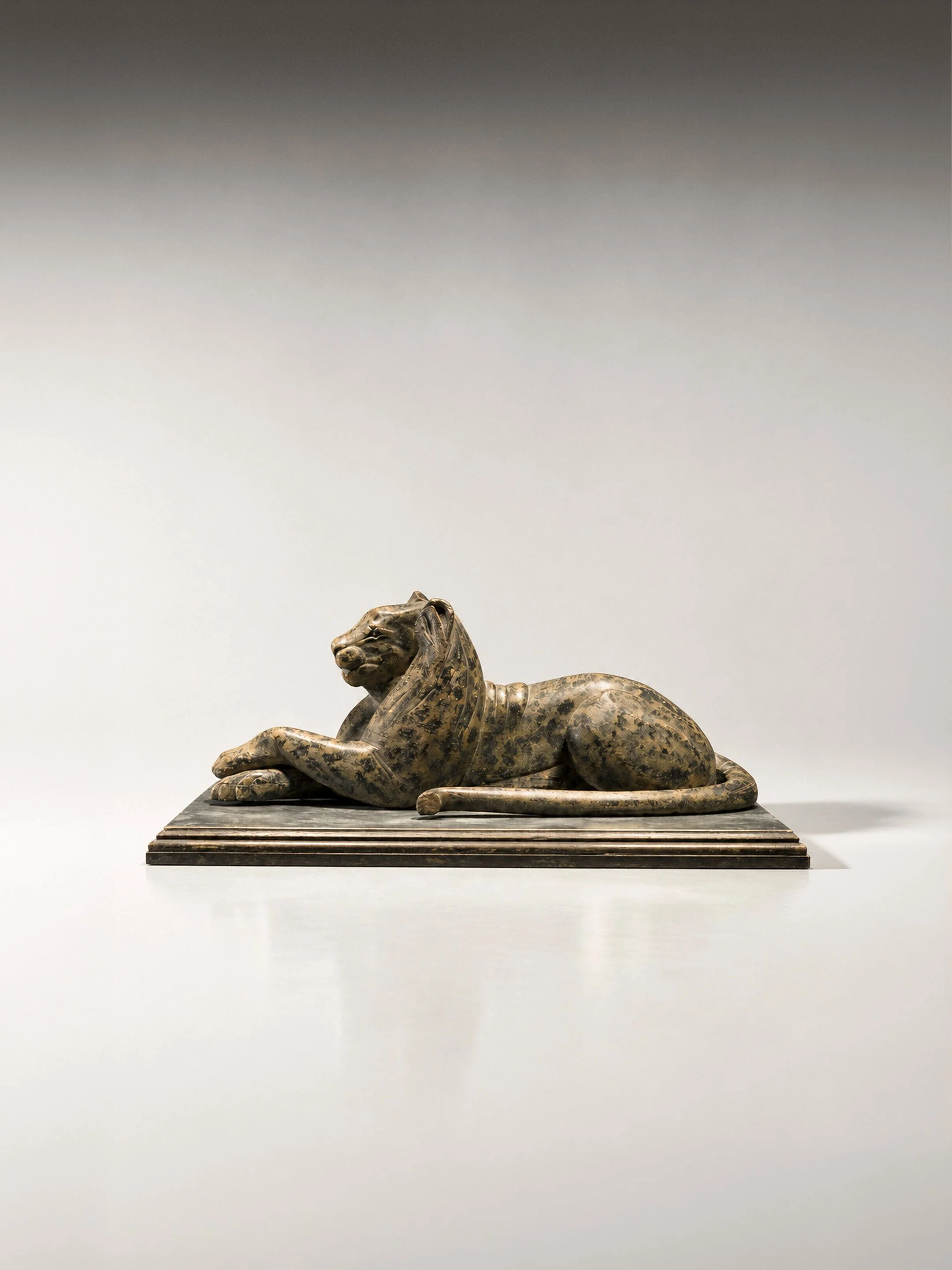 Image 1 of 6
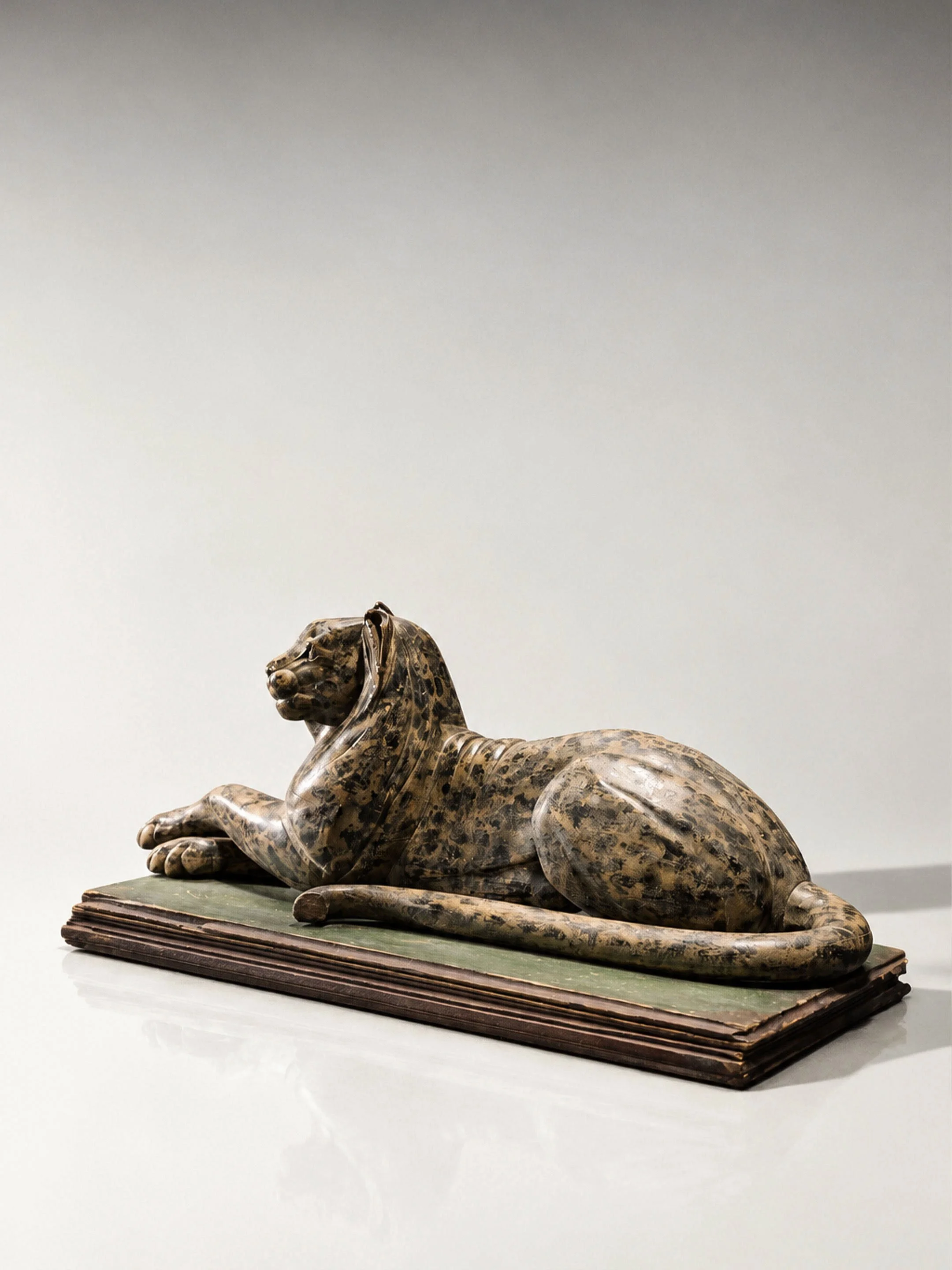 Image 2 of 6
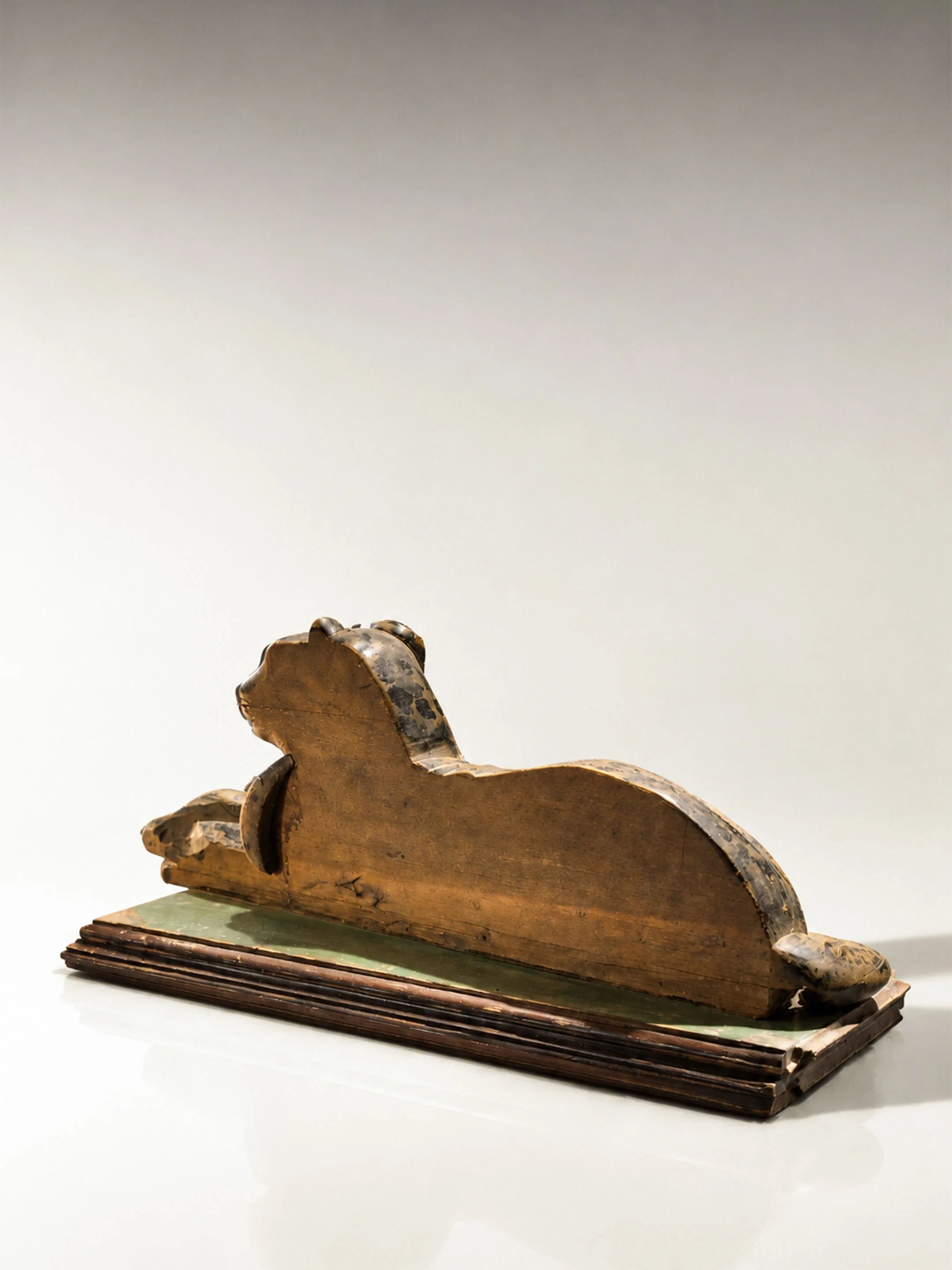 Image 3 of 6
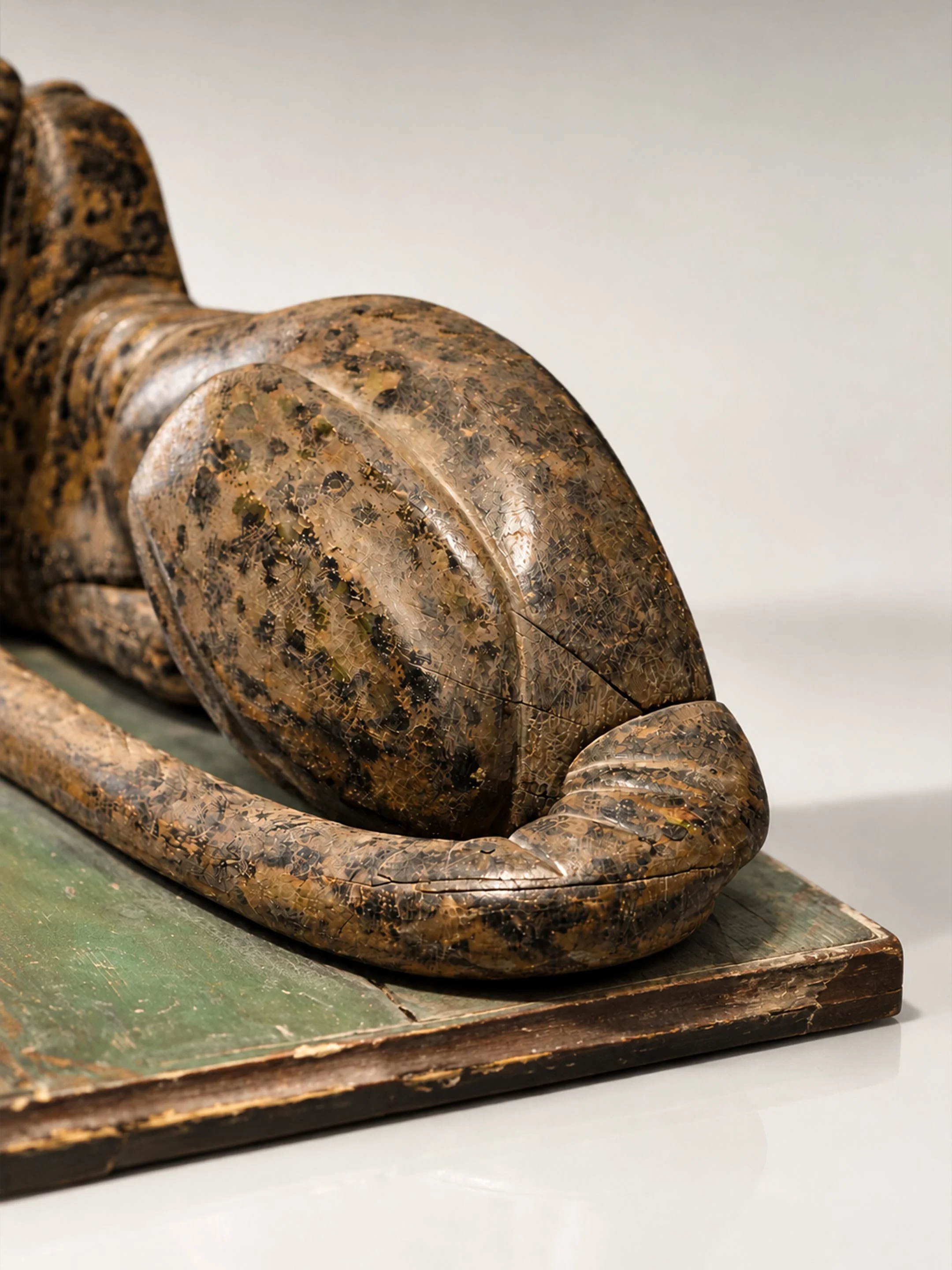 Image 4 of 6
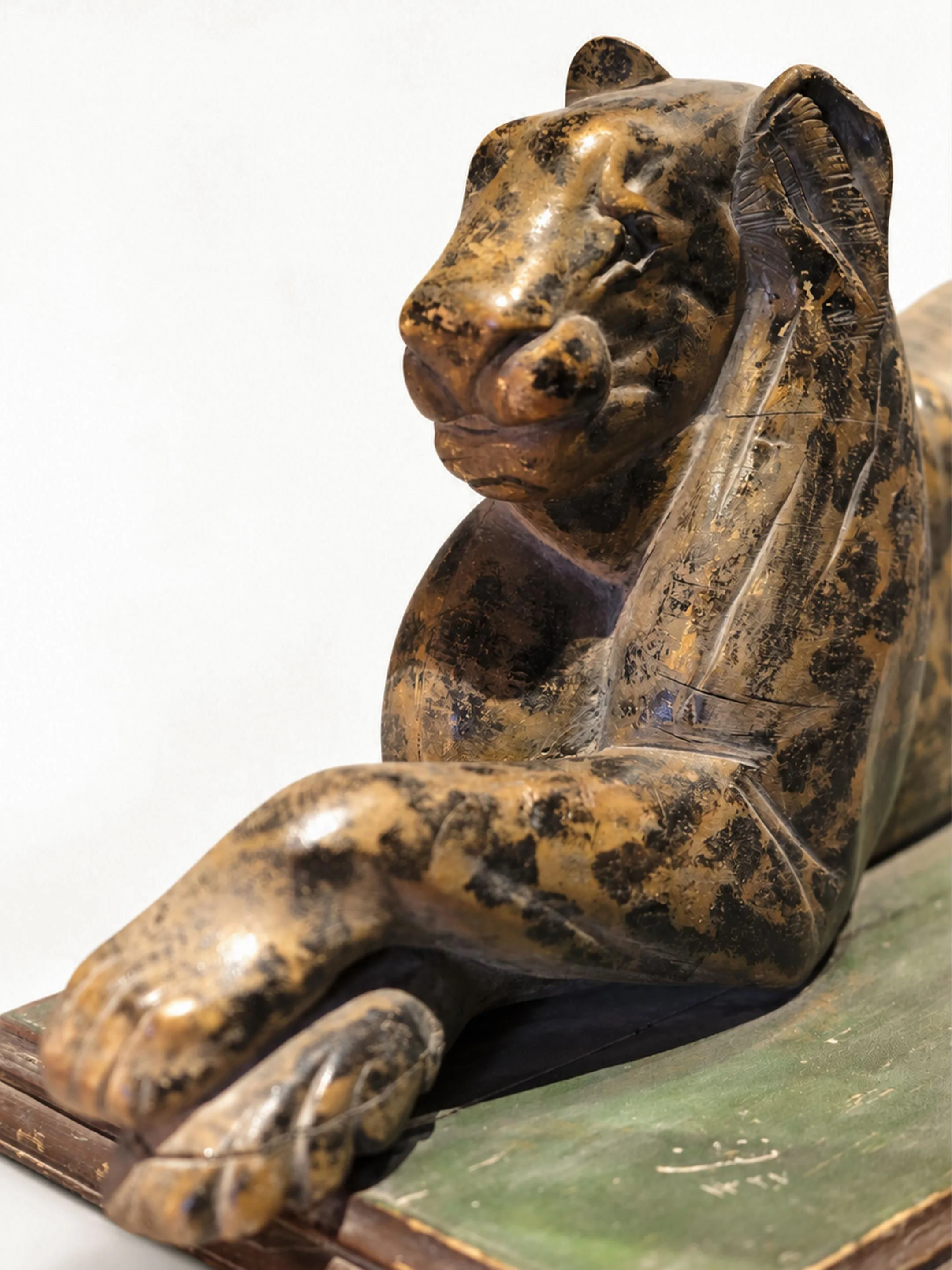 Image 5 of 6
 Image 6 of 6